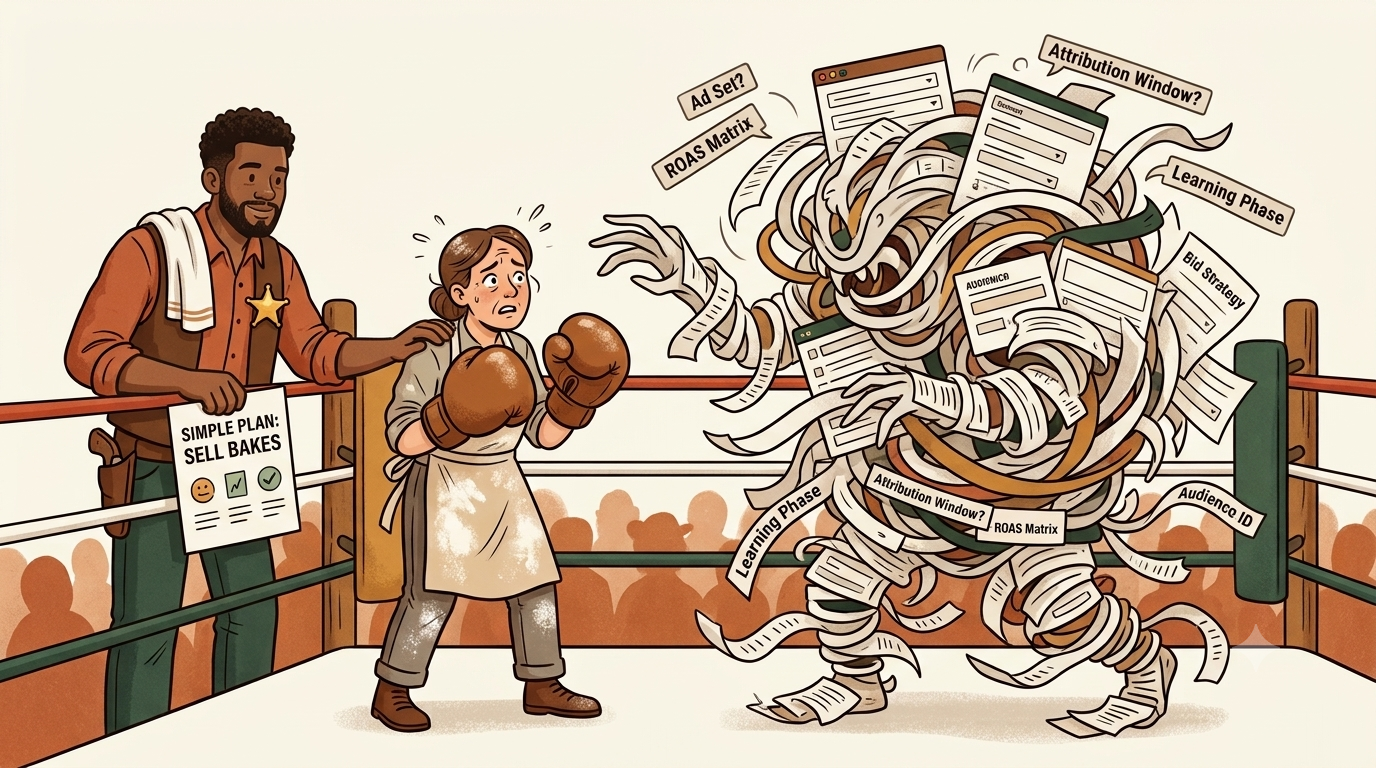
Last month I sat down to launch one ad. One. A simple thought in my head: more online orders, about thirty bucks a day, people near the shop.
Forty minutes later I was reading a help article about the difference between a campaign and an ad set, with eleven tabs open, and I still hadn't answered the first dropdown. Objective: Sales? Traffic? Engagement? Awareness? Leads? App promotion?
I want customers. Which one of these is customers.
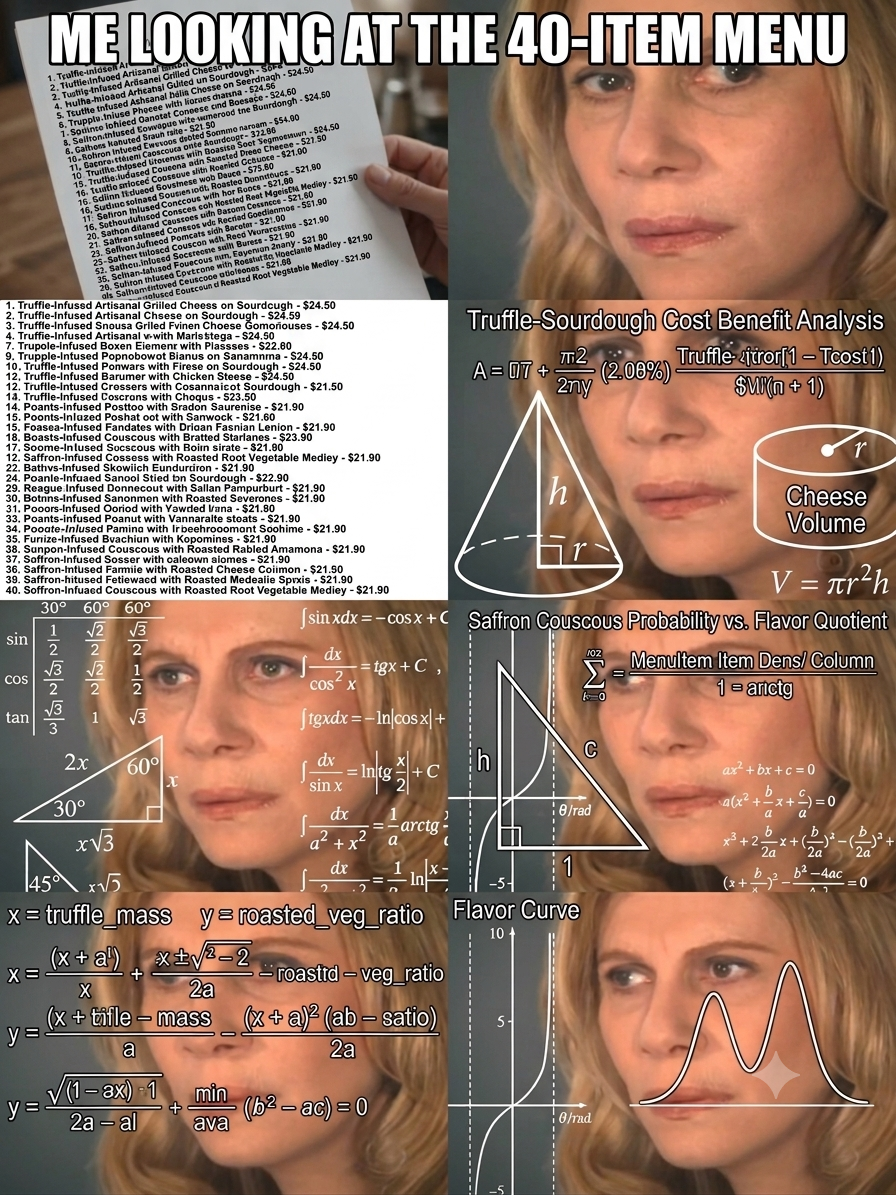
Here's the thing that actually broke me though. It wasn't that the form was long. It's that I realized the form is a language. Meta has invented a whole private vocabulary, ad sets, CBO, Advantage+, attribution windows, learning phase, and before it will take your money, you have to become fluent in it. Not fluent in advertising. Fluent in Meta.
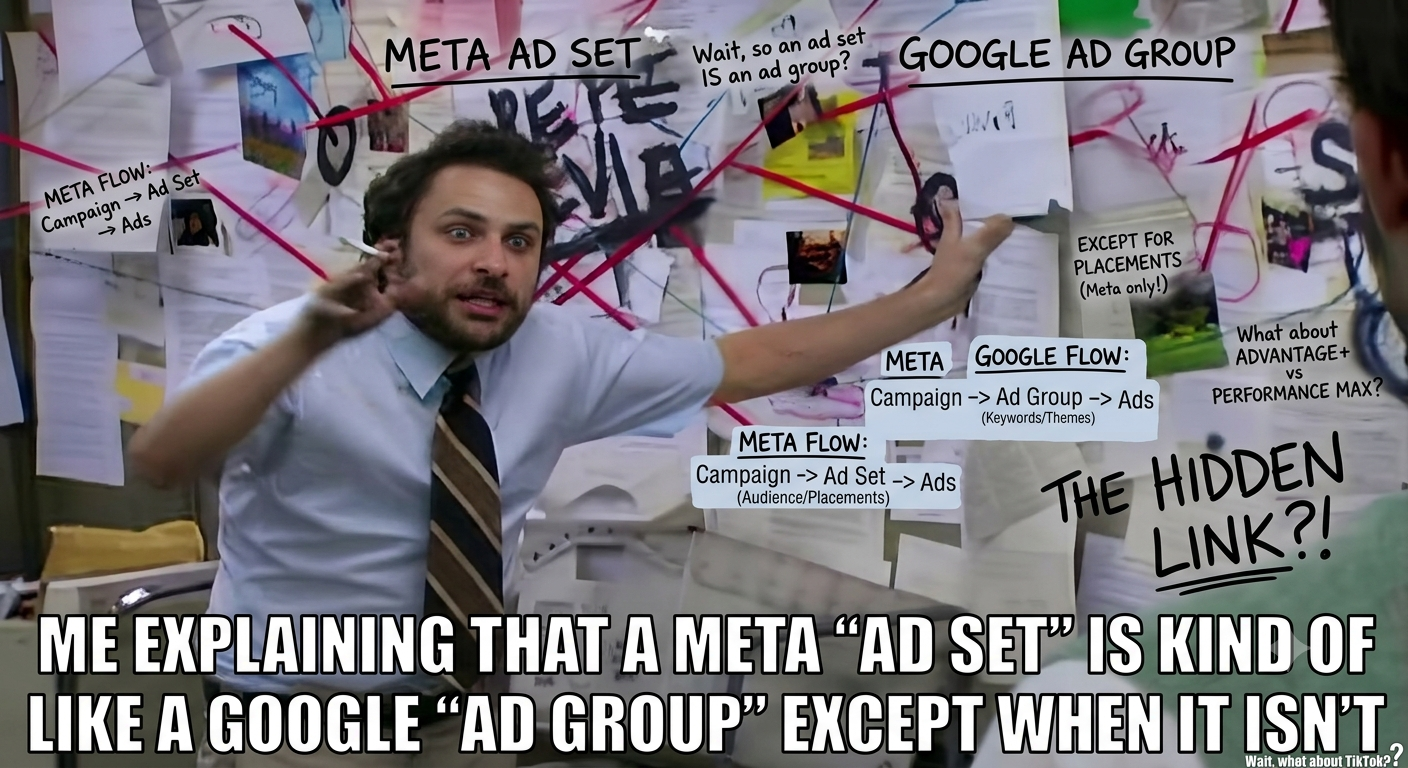
Then I opened Google Ads to do the same thing there, and it's a different country with different laws. Google doesn't think in audiences and creatives, it thinks in keywords and match types and quality scores. The same idea, "people near my shop who might buy," is a radius and interest stack on Meta, and a geo setting plus keyword themes on Google. Even the word "conversion" means a differently-configured thing on each one. Same intent, two bureaucracies, zero shared paperwork.
And that's just two of them. TikTok is its own dialect. LinkedIn is its own dialect. YouTube, Pinterest, whatever launches next year, every platform you add is another language course before they'll take your money.
And somewhere around midnight it hit me why this felt so stupid. I write software. We solved this exact problem decades ago. Nobody writes machine code for each chip anymore, you write the program once, in a language humans can read, and a compiler translates it for whatever machine it's running on. Intel, ARM, whatever. The translation is the computer's job.
More recently it got even better. With tools like Cursor I don't even fill in the code sometimes, I tell it what I want, it drafts, I read the diff, I approve or fix it. Intent in, work out, human reviews.
So why, in 2026, is giving a trillion-dollar ad platform my money still "fill out our 40-field form in our private dialect, and if you pick wrong we'll happily spend your budget on the wrong thing"?
Of course Ads Manager doesn't proofread your campaign. Your typo is their revenue.
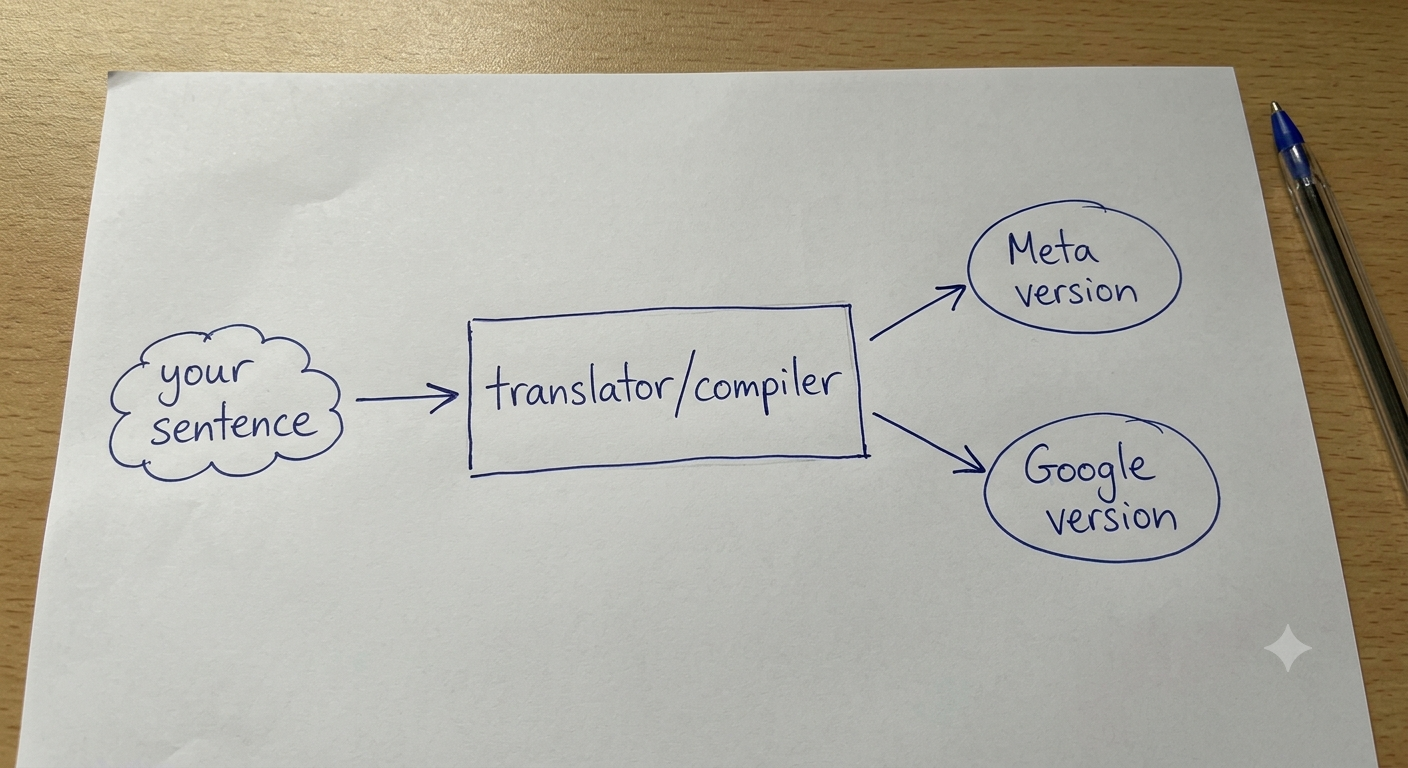
That's the thing I ended up building, and the core of it is almost embarrassingly simple: your intent is the spec.
You say it in your own words, "more online orders, $30 a day, people near my bakery," and the system compiles it. Not into some generic lowest-common-denominator campaign, but into a native one per platform. On Meta it becomes a proper sales campaign with a radius audience and the right optimization event; on Google it becomes the search campaign version of the same intent, keywords and all. Each one built the way a good media buyer would build it on that platform, following that platform's rules. The translation is the computer's job. Like it always should have been.
And here's the part I care about long-term: once your intent is the spec, a new platform is just a new compile target. I started with Meta and Google because that's where small businesses actually spend. But as the rest get added, TikTok, LinkedIn, whatever's next, your side of the deal never changes. Same sentence. The machine learns the new dialect, not you. That's the whole point.
But, and this is where the Cursor thing matters, it doesn't just run off and do it. It hands you back a plan you can actually read. Five sentences:
Goal: get online orders (your purchase tracking works, I checked). Budget: $30 a day, about $900 a month. Who sees it: people within 10 miles who like baking, minus anyone who bought recently. Where: Instagram and Facebook feeds. The ad: [your photo, headline, button, shown exactly as it'll appear].
Tap anything, change anything. Say "make it $25 and weekends only" and watch the plan rewrite itself with the old numbers crossed out. There's an Advanced toggle that exposes every raw platform setting if you're the kind of sicko who enjoys attribution windows. No judgment. Some of my best friends, etc.
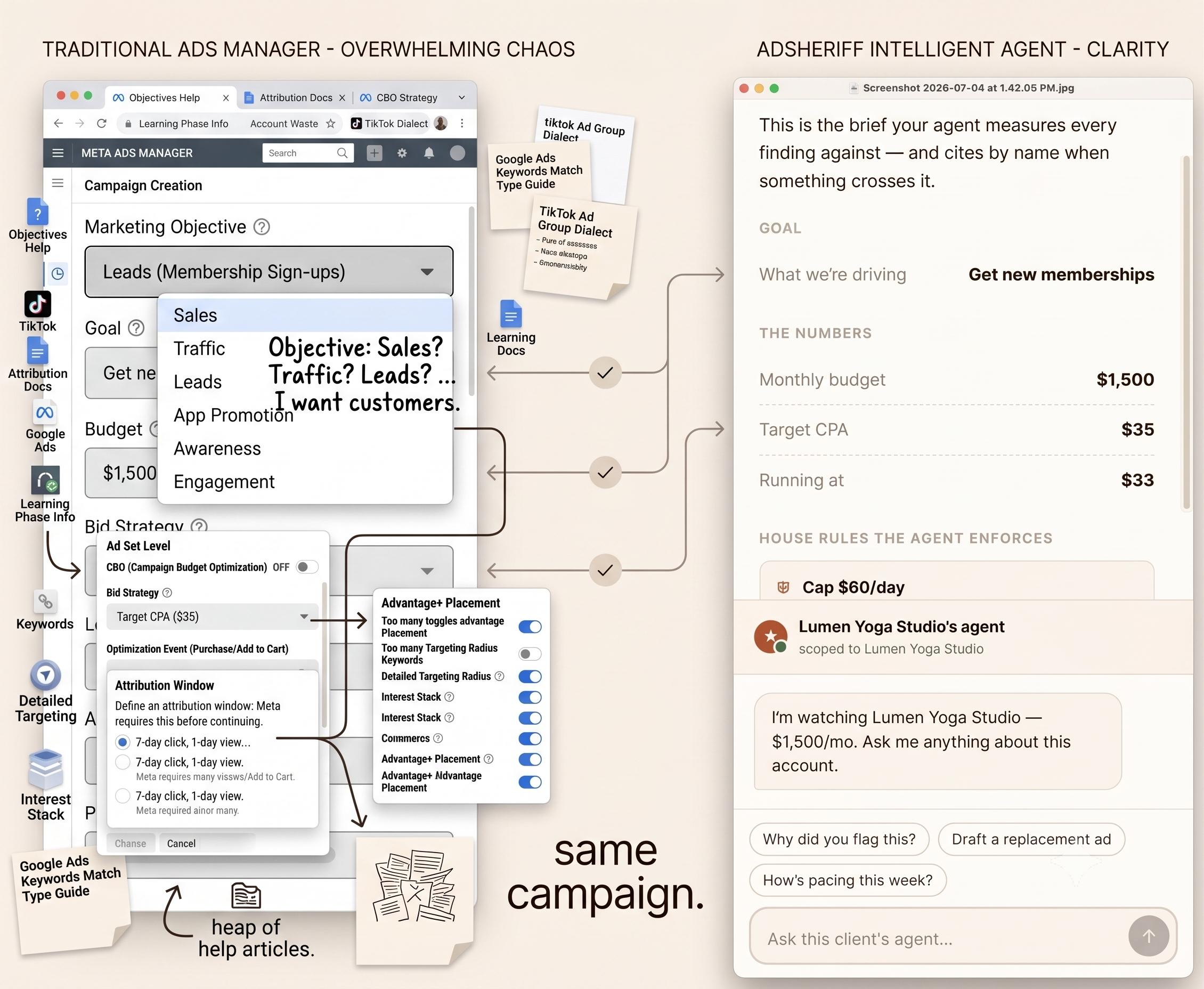
And then the part that I'm honestly annoyed nobody built before, because it's the part that saves actual money: before a single dollar moves, it checks your work. The same engine that watches live accounts runs against the draft. "This audience overlaps your other campaign 55%, they'd bid against each other and you'd pay both times." "You said you want orders, but this setup is optimizing for clicks." "You want purchases but there's no purchase tracking on your site, neither of us would ever know if this worked."
A senior media buyer proofreading every campaign before it goes live. Every other tool on earth would have let you publish that mistake. The platforms especially would have let you. They get paid either way.
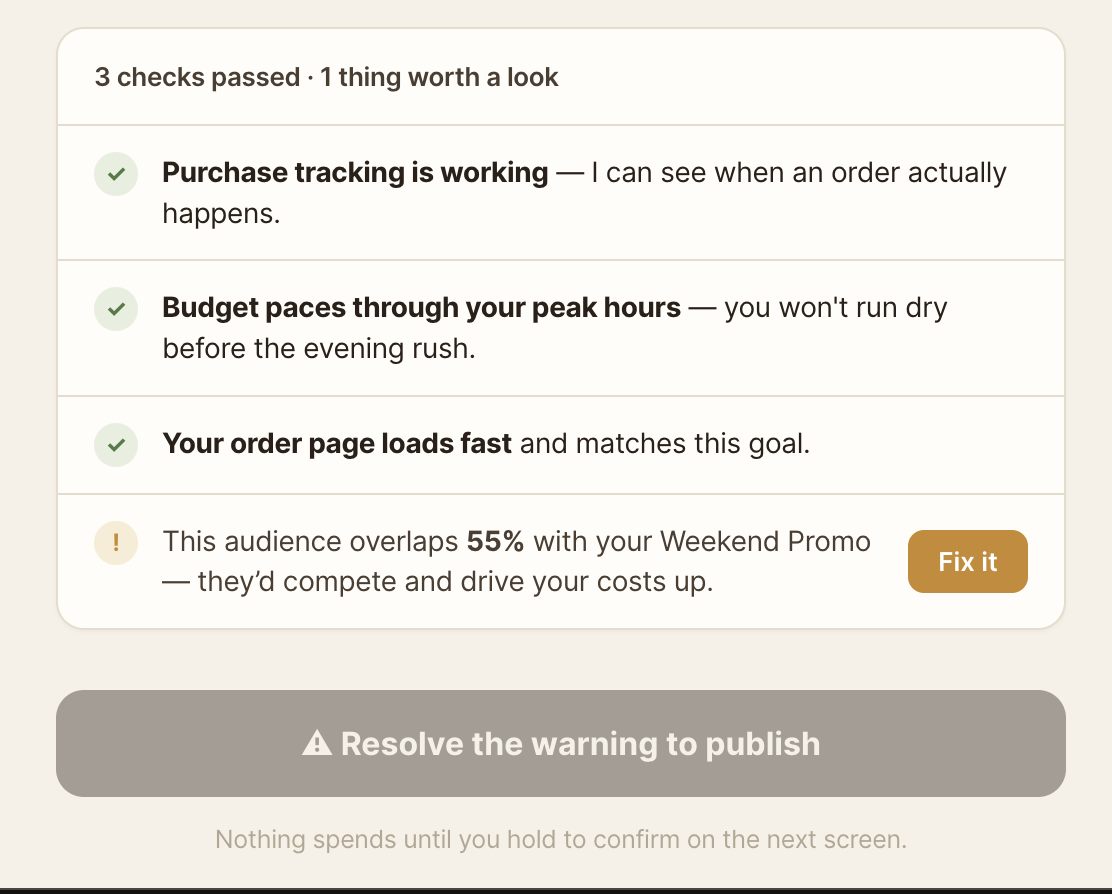
One more thing falls out of this that I didn't fully appreciate until I built it. Because you told the system what you wanted, it remembers. So three weeks later it can say something Ads Manager is structurally incapable of saying: "You asked for orders. This campaign is getting plenty of clicks and zero orders." Ads Manager can't tell you that. Ads Manager never knew what you meant. It only knew which dropdowns you picked, and you picked them at midnight, guessing.
Intent in. Native campaign out, per platform. A plan you can read. A check before the money moves. A watchdog that knows what you actually asked for.
That's it. That's the whole idea. I've started calling it "Cursor for ads" because that's the fastest way to explain it to anyone who codes, but honestly the pitch for everyone else is simpler: you shouldn't need to learn a second language to run ads.
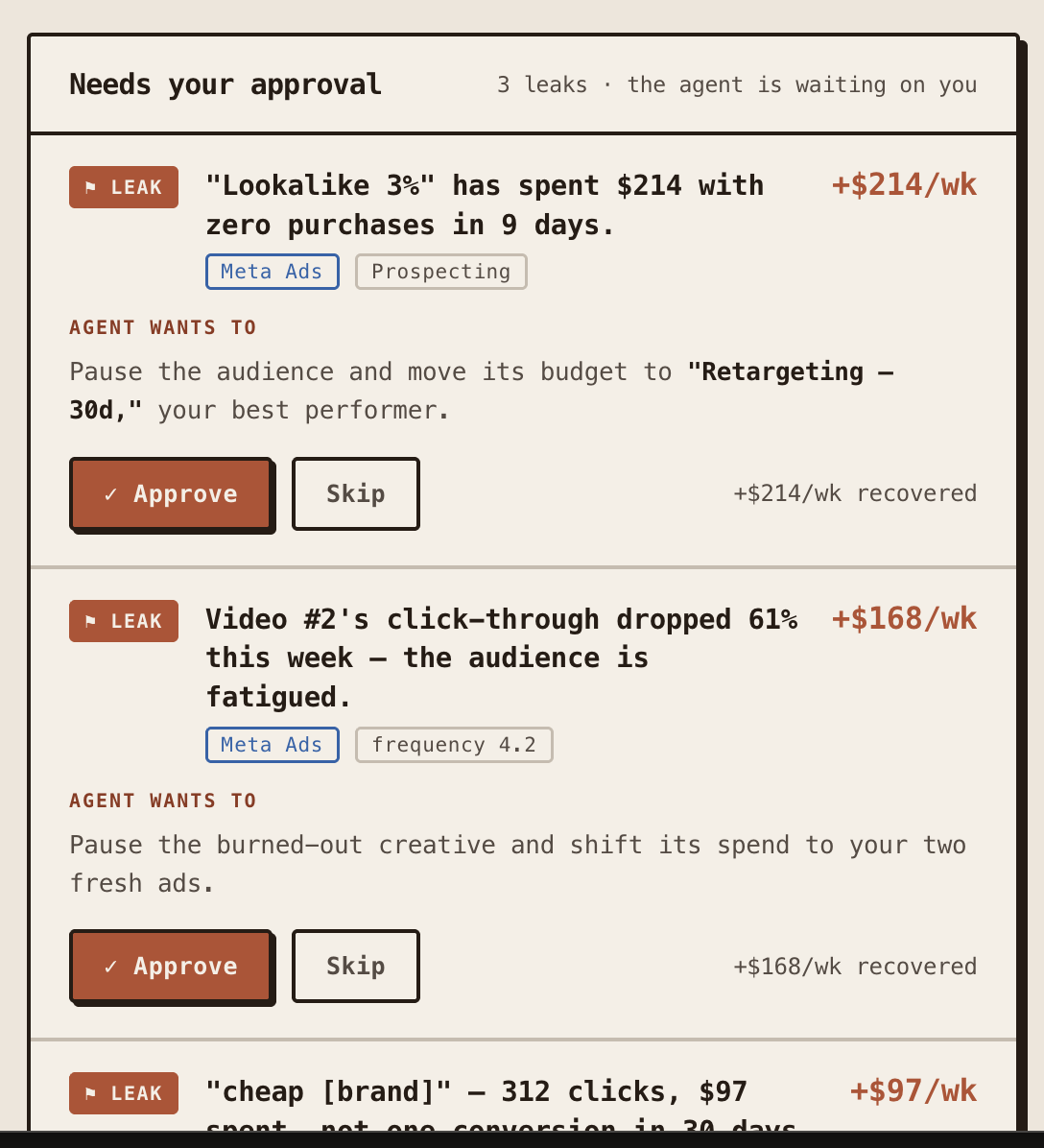
That what AdSheriff is, and yes, you're reading this on its website, so consider the bias declared. It watches Meta and Google accounts for waste (that part already finds real money, the average small account leaks about $1,100 a month, which is its own rant for another post), and the intent-to-campaign part is what I've just described. If you run ads and want the agent to read your account and tell you what it finds, free, read-only, keep the report either way, the button's at the top of this page.
Or don't. But at least now you know: when the objective dropdown makes you feel stupid, it's not you. It's the form.
Founder, AdSheriff